Economists once worked from a fairly settled premise: an open world economy, governed by rules most countries broadly accepted. That premise has worn thin.
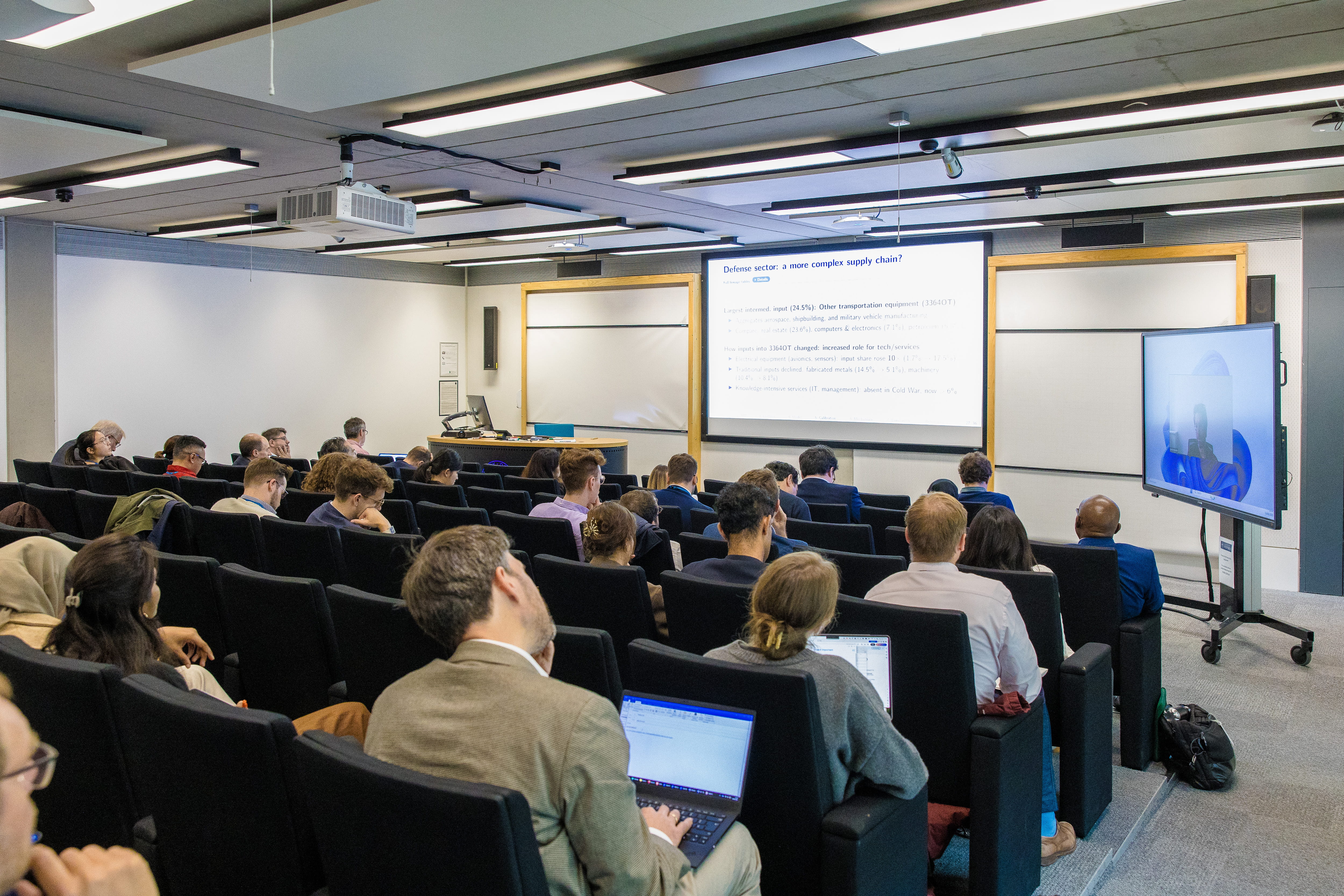
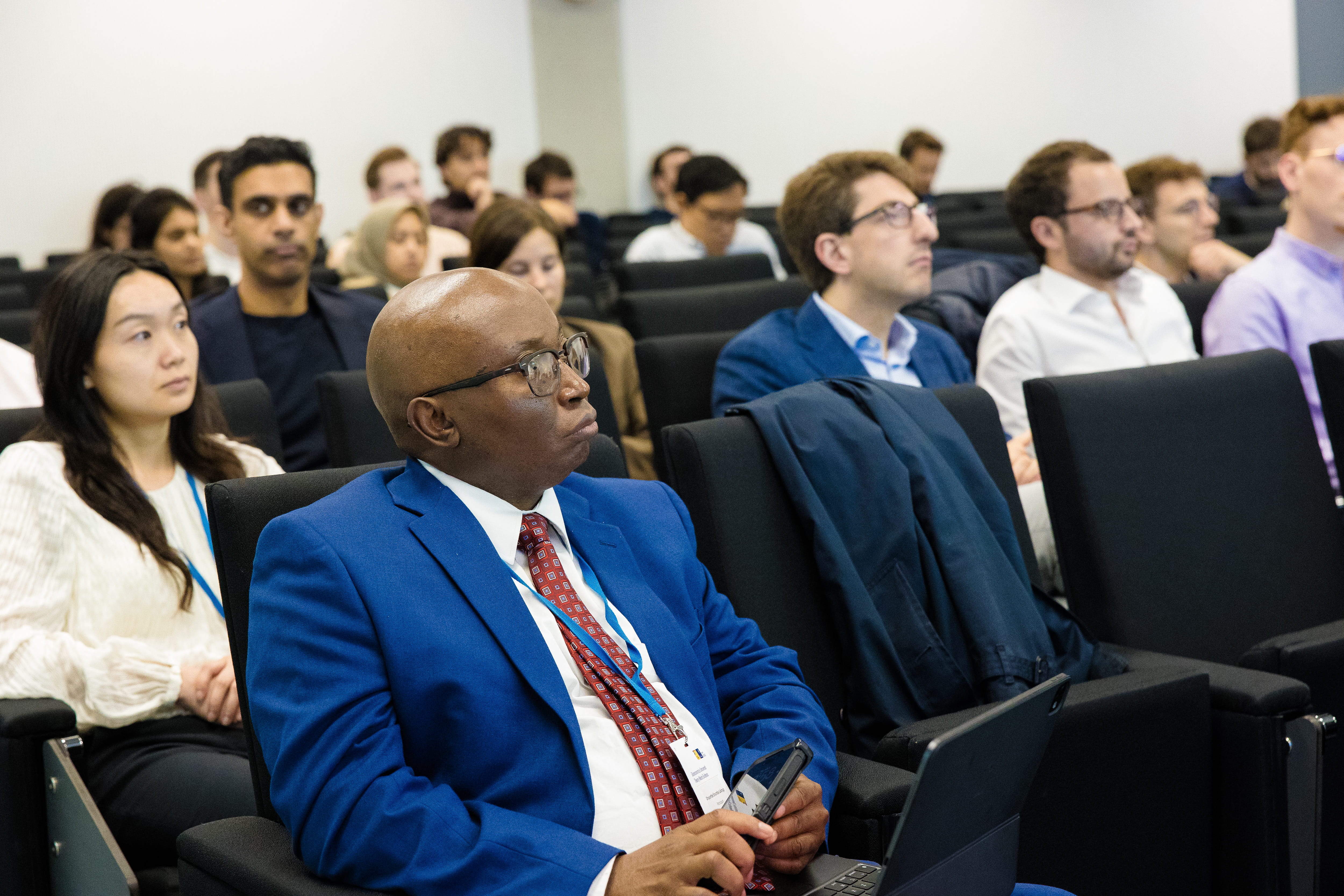
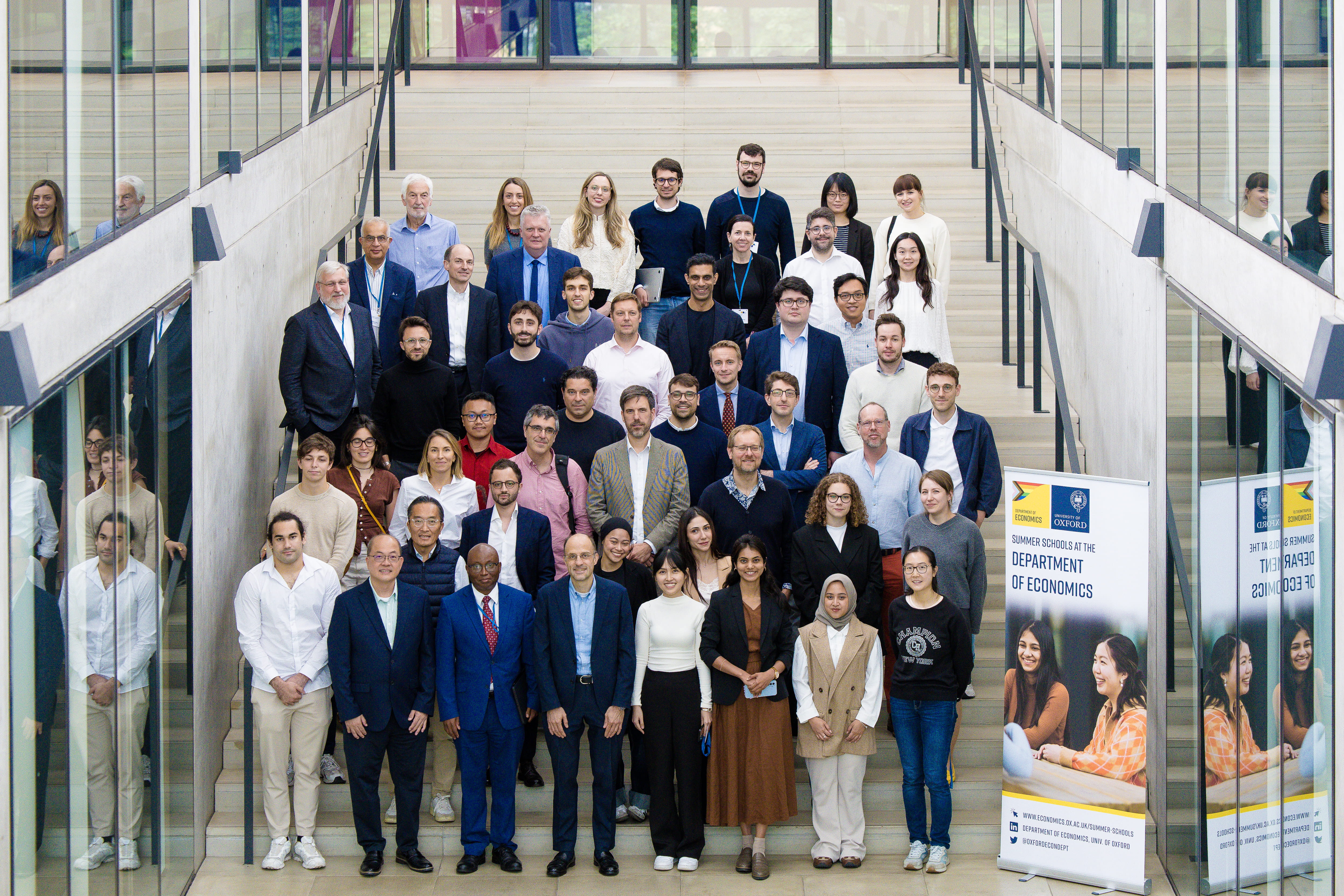
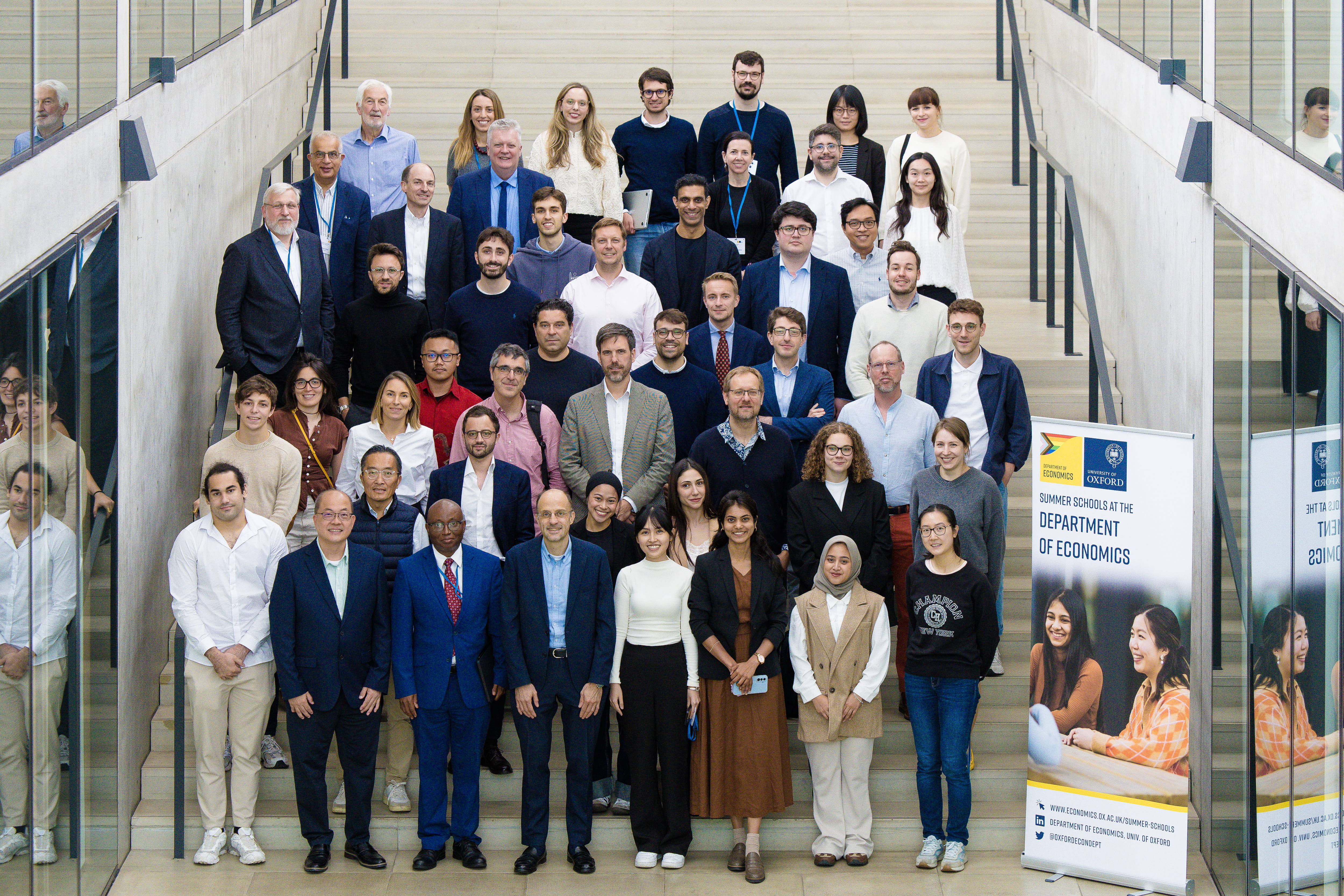
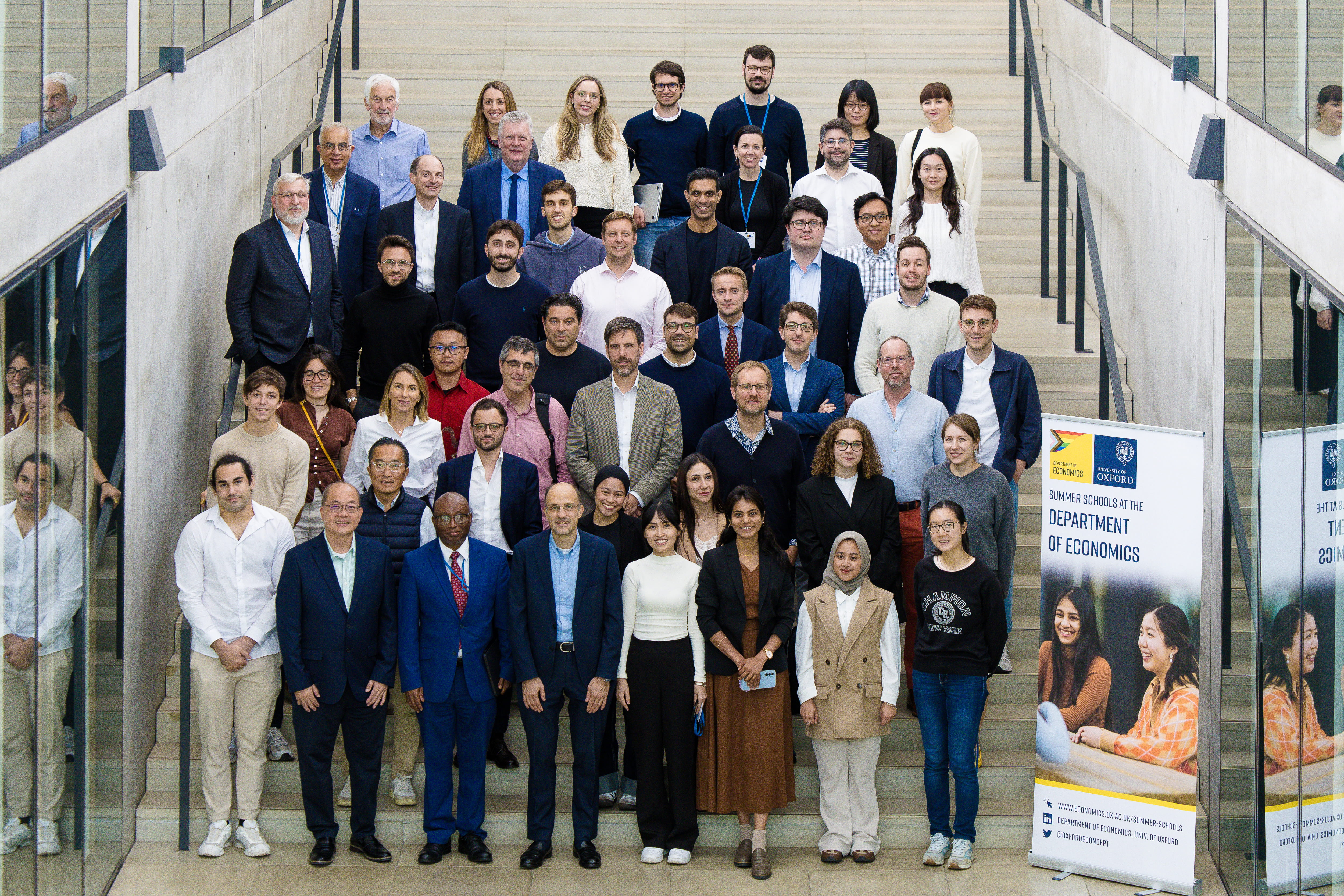
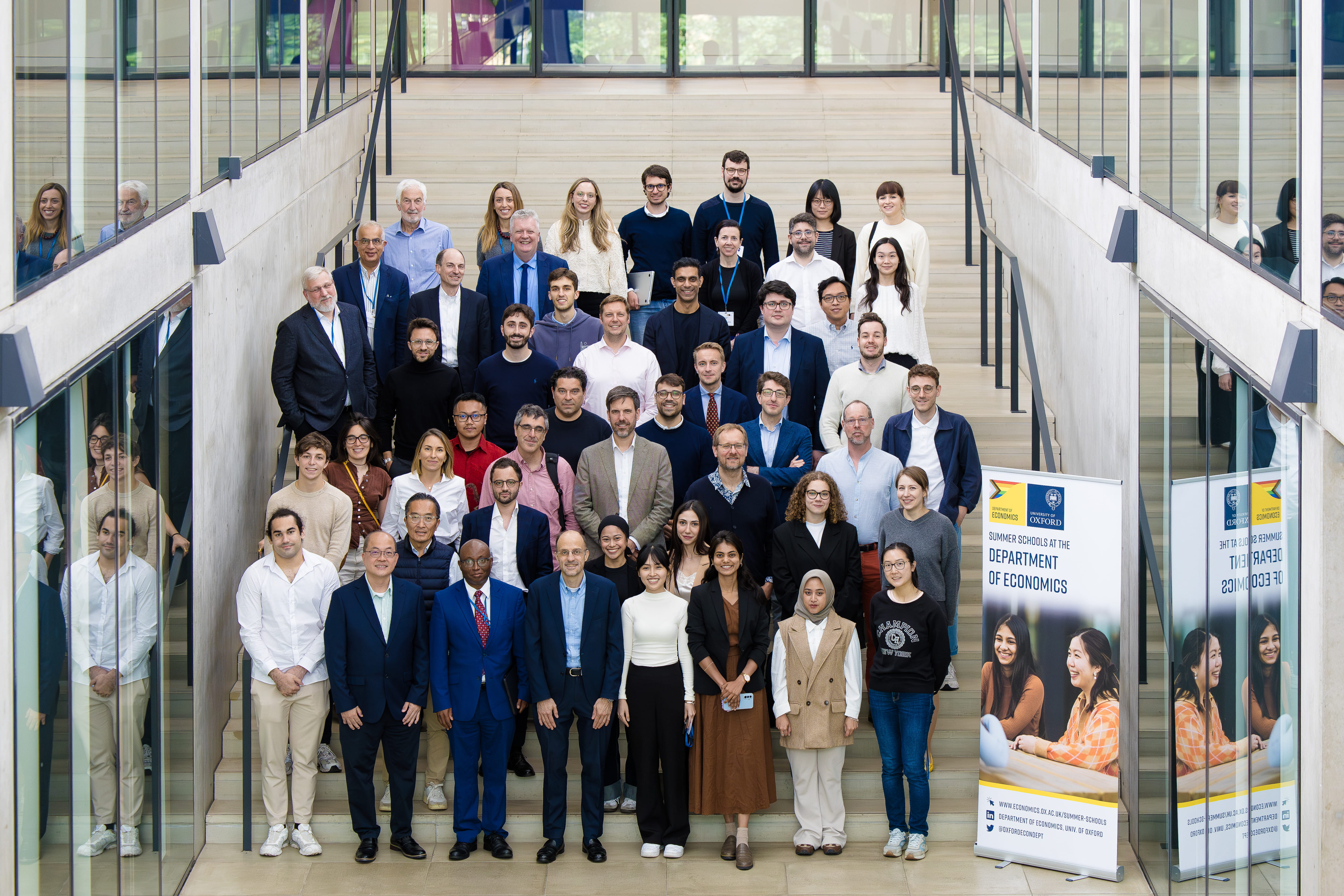
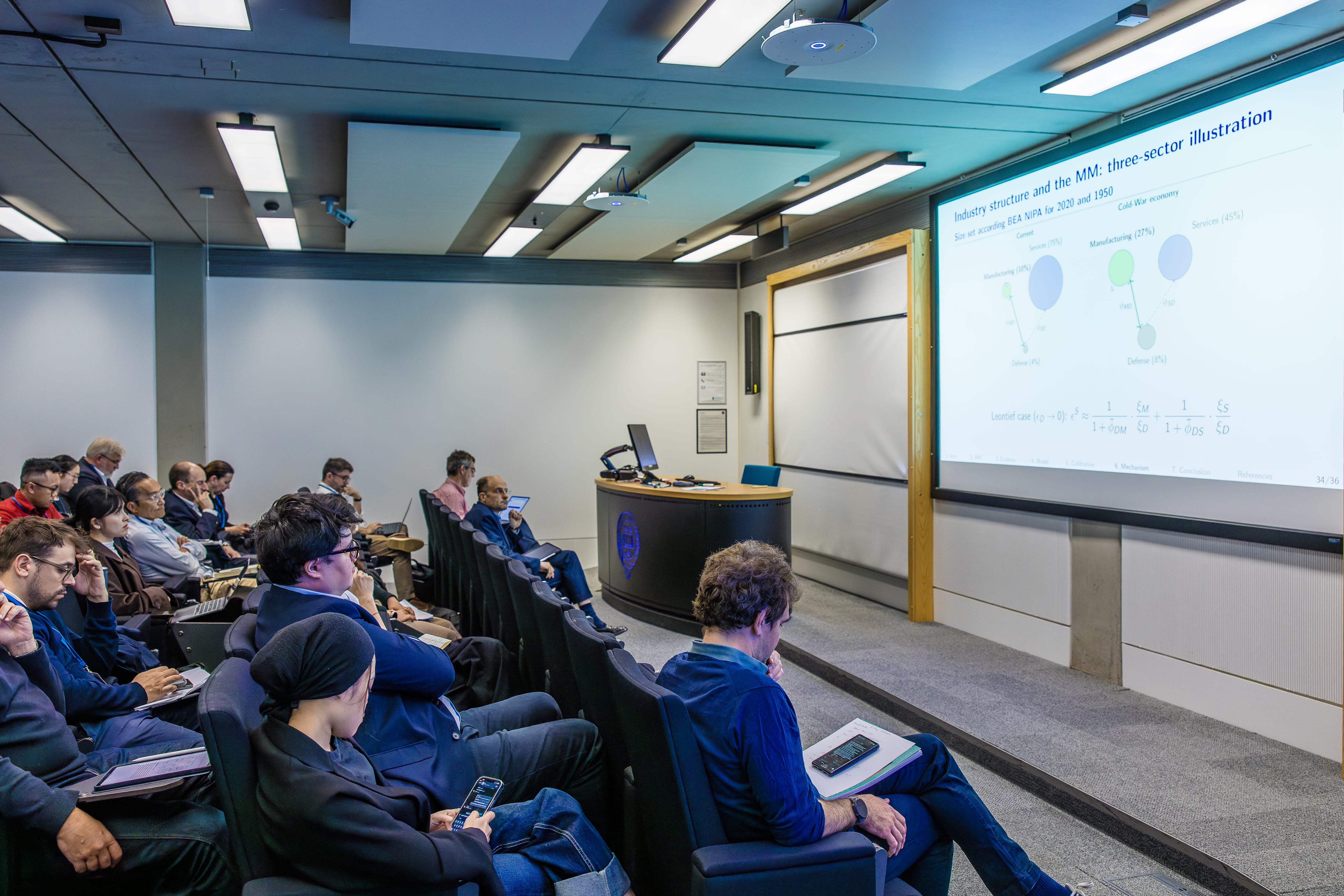
In June 2026, the University of Oxford’s Department of Economics gathered academics and senior policymakers for its inaugural Geoeconomics Summer School, Geoeconomics Uncovered: Theory Meets Evidence, to explore what happens when trade, finance and security stop being separate problems.
Across four days, lectures by Jesús Fernández-Villaverde (University of Pennsylvania) and Christopher Clayton (Yale School of Management) were complemented by applied tutorials, before culminating in a research workshop and high-level policy panel. Running throughout the programme was a common question: as economics and geopolitics become increasingly intertwined, what does this mean for macroeconomic policy, institutions and the wider global economy?
The research covered topics ranging from the long-run economic consequences of war to vulnerabilities in global telecommunications infrastructure, the declining effectiveness of defence spending, and the role that finance plays in determining who wins wars.
These themes carried through to the concluding policy panel, where discussion repeatedly returned to one central concern. As Huw Pill, Chief Economist at the Bank of England, observed, economists are better at identifying shocks than understanding the shifting structure those shocks travel through.
Panel discussion: The Economics of Geopolitical Disruption
Chaired by Tony Venables (University of Oxford), the policy panel brought together Falko Fecht (Deutsche Bundesbank), Adnan Khan (London School of Economics), Huw Pill (Bank of England), Ana Maria Santacreu (Federal Reserve Bank of St. Louis) and Georg Strasser (European Central Bank). Rather than focusing on a single issue, the discussion returned repeatedly to three broad themes.
Is any of this actually new?
Pill challenged the widespread perception that the global economy has entered an unprecedented period. Half a century ago, he noted, central banks regularly dealt with major external shocks. If anything, the relatively calm decades of globalisation were the historical exception rather than the rule.
Fecht and Strasser argued that today's challenges reflect a deeper shift. The post-war global economy was built around a single dominant power – the United States – that could sustain and enforce an international rules-based system. As China has emerged as a serious rival, economists must go back to models where that dominance can be credibly challenged. In practice, that means returning to models rooted in game theory.
Open, or protected?
The thorniest question, most of the panel agreed, was how countries can remain open to international trade without becoming strategically vulnerable.
Santacreu identified two major developments reshaping the global economy. First, the world economy is fragmenting. Second, firms are redesigning supply chains to prioritise resilience rather than pure efficiency. China spent years establishing itself as the world's manufacturing hub for labour-intensive goods but has since invested heavily into high-tech production and now supplies critical inputs to European manufacturers. Once supply-chain frictions are taken into account, Santacreu argued, it becomes "dangerous to rely too heavily on countries that specialise in critical inputs."
Strasser pressed the point. The usual dependence measures, he argued, flatter us, because they miss what sits further up the chain. Non-Chinese suppliers of critical minerals, for example, may ultimately depend themselves on processing facilities located in China. Looking more broadly, he argued that Europe continues to lag behind the United States on several measures of economic power, partly because it lacks a comparable financial centre. Only by considering the UK alongside the European Union does Europe begin to approach US scale.
His line on the imbalance was sharp - that a country like, e.g., Germany, is precisely the sort of small exposed country a dominant power can lean on. The harder truth, he added, is that there are trade-offs. Try too hard to cut your dependence and you may throw away the very gains from specialisation that trade brought in the first place. It is crucial to find a right balance, so that the push to regain independence does not overshoot.
Khan gave the issue an institutional shape. Dependence on trade weakens a country's bargaining position during geopolitical disputes, giving resilience a strategic value. Yet resilience is precisely the kind of investment that markets undersupply. In that sense, geopolitical resilience represents a classic market failure – one with significant national security implications.
The shock in front of you, or the slow change behind it
Speaking from the perspective of monetary policymaking, Pill warned against concentrating on immediate disruptions and missing the slower shift underneath it. "There is a danger," he argued, "that we don't work out what the long-term implications are, and we focus on the short-term implications."
When the economy’s structure changes, the path a shock takes changes too. Policymakers therefore need continually to reassess whether the models remain fit for purpose. With energy and food prices lurching around in non-linear ways, he said, the honest aim is not a policy that is perfect in every scenario but one that “does ok in many states of the world.”
Fecht concluded by highlighting the implications for financial stability. Insolvencies have risen steadily since 2022 and increased by 10% during 2024, according to Allianz estimates, with much of the deterioration linked to geopolitical tensions. Supply-chain disruptions have eaten into bank capital and “geopolitical tensions also led to an increase in banks’ refinancing costs” as investors started charging for the uncertainty around where banks are exposed.
The more the economy responds to interest rates through supply-side channels, he warned, the more carefully central banks have to act. Fecht also argued that Europe continues to suffer from fragmented policymaking. Until greater coordination emerges across the European Union, its capacity to respond effectively to pressure from either Washington or Beijing will remain limited.
Paper presentations
Empirics
Why economies don’t simply bounce back when a war ends
João Monteiro (Einaudi Institute for Economics and Finance) examined the long-run economic consequences of armed conflict by combining data from the Uppsala Conflict Data Program with the Global Macro Database. His findings challenge the common assumption that economies naturally rebound once hostilities cease.
A decade after conflict begins, real GDP remains around 16% below its pre-conflict trend. Rather than representing a temporary disruption, war often leaves lasting economic scars that persist well beyond reconstruction.
Monteiro argued that much of this long-run damage stems not from conflict alone but from the interaction between war and pre-existing fiscal vulnerabilities, consistent with the fiscal theory of the price level. Countries entering conflict with weak public finances experience substantially larger and more persistent economic losses.
The effects are also highly uneven. Lower-income countries suffer proportionately greater declines in output and emerge from conflict with higher levels of inequality, increasing the likelihood of renewed civil conflict and creating the conditions for a persistent conflict trap.
When countries drift apart politically, ideas stop crossing borders
Ana Maria Santacreu (Federal Reserve Bank of St. Louis) explored how geopolitical fragmentation affects the international diffusion of technology.
Her research measures political alignment using voting patterns at the United Nations and tracks technology transfer through international royalty payments. Political distance influences both the likelihood that technologies are licensed internationally and the price firms charge when licensing agreements are reached.
Using a structural model of royalty bargaining, Santacreu identified two mechanisms driving these effects. First, higher trade barriers reduce market size, lowering the returns to innovation. Second, geopolitical tensions increase concerns about contract enforcement. As the perceived risk of agreements breaking down rises, innovators demand higher upfront payments, while firms become less willing to license technologies across borders.
The result is that technology transfer becomes simultaneously less common and more expensive. One of the quieter costs of geopolitical fragmentation, therefore, is that good ideas spread more slowly.
Ten cut cables could take down a fifth of the world’s data
Christoph Trebesch (Kiel Institute for the World Economy) presented the first comprehensive historical dataset mapping ownership and disruptions of global subsea telecommunications cables from 1850 to 2025.
The research demonstrates that telecommunications infrastructure has long been an instrument of geopolitical competition. Great powers have repeatedly targeted communications networks during periods of conflict, and today's digital infrastructure exhibits similar strategic vulnerabilities.
The United States currently owns roughly one-third of global subsea cable capacity and carries approximately 65% of routed international data traffic, compared with around 25% on Chinese-owned cables.
Perhaps the most striking finding concerns the concentration of risk within the network. Disrupting just ten carefully chosen cables at key chokepoints could interrupt between 10 and 20 per cent of global data flows, revealing a level of concentration comparable to that observed in many critical goods supply chains.
Money helps win wars, which makes sanctions a weapon in their own right
Dominic Rohner (Geneva Graduate Institute) examined whether financial resources directly influence military outcomes.
Drawing on more than 700 interstate militarised disputes between 1977 and 2013, the study uses movements in the prices of approximately 300 internationally traded commodities to generate revenue shocks unrelated to the conflicts themselves.
The results indicate that financial resources substantially affect battlefield outcomes. Revenue windfalls equivalent to 10% of GDP increase a country's probability of victory, rather than stalemate, by around 4%.
The findings suggest that sanctions reducing a country's access to financial resources can weaken military effectiveness directly, highlighting that economic statecraft influences conflict not only through diplomacy and trade but also through its effects on the resources available for warfare.
Theory
A dollar of defence spending no longer buys a dollar of strength
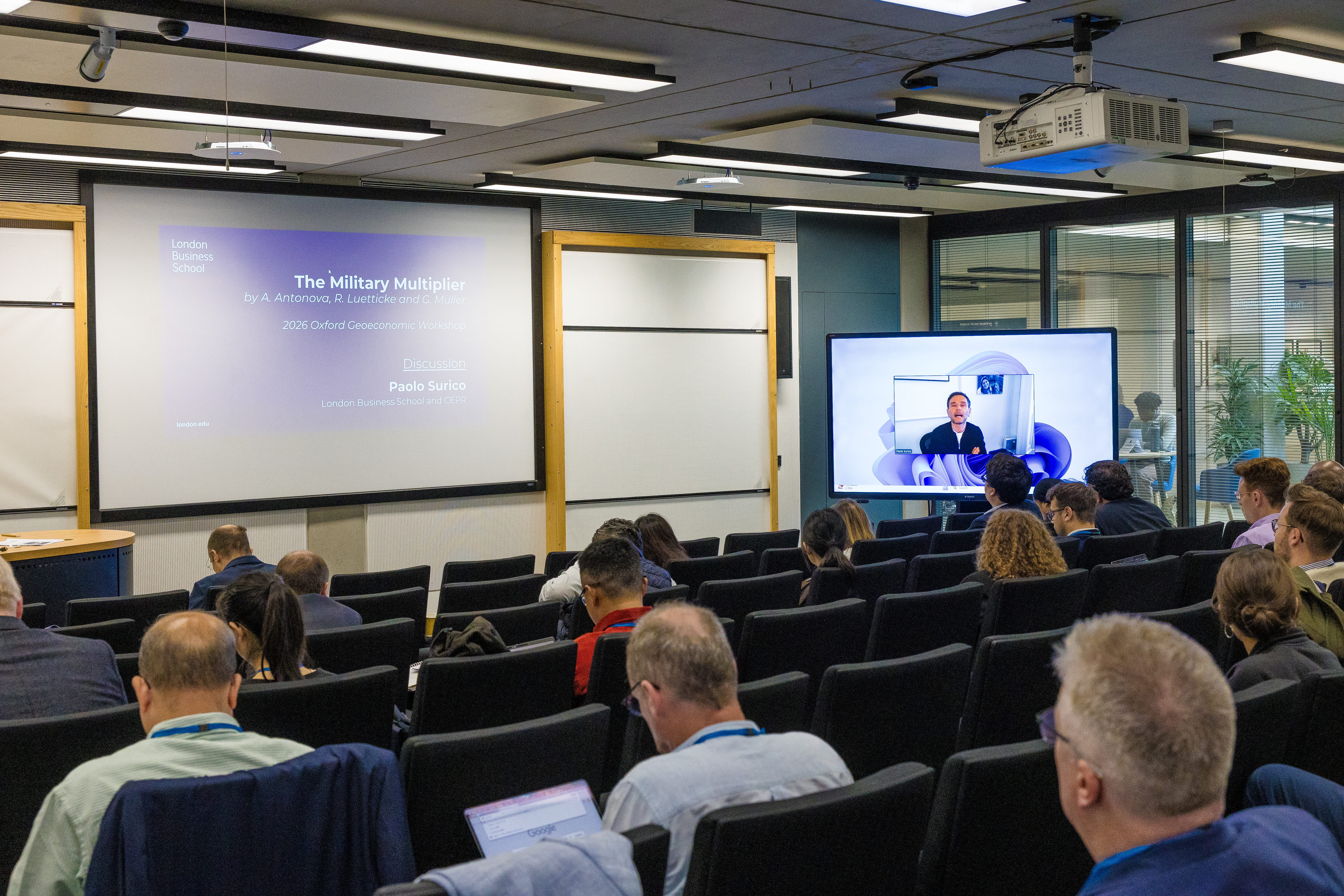
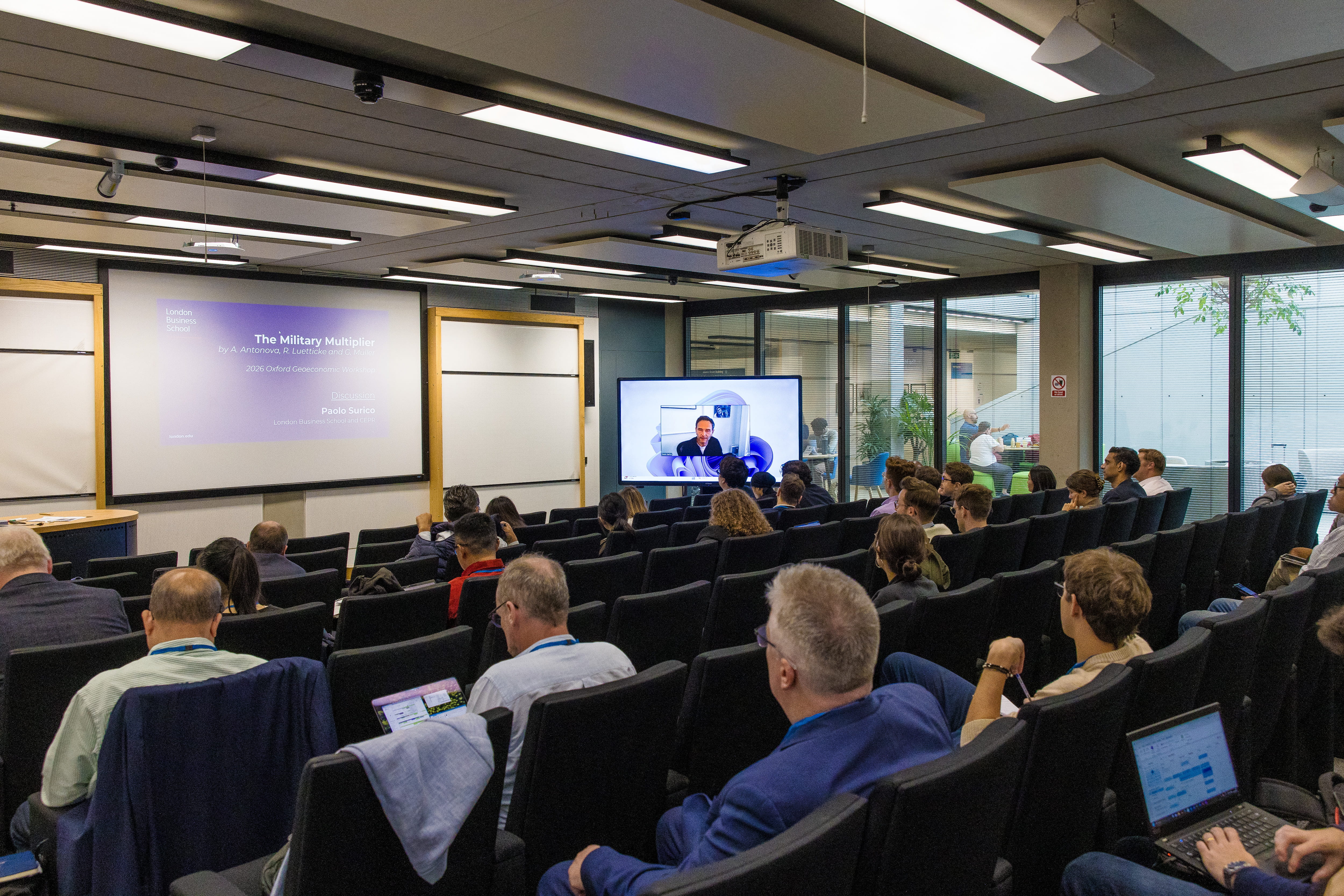
Gernot Müller (University of Tübingen) presented research on the military multiplier: the amount of military capability generated by each additional dollar of defence spending.
Unlike the fiscal multiplier, the military multiplier accounts for changes in defence procurement costs. When governments expand military spending simultaneously, supply constraints can push up prices, meaning additional spending delivers less capability than expected.
Using a real business cycle model calibrated to historical data, Müller showed that defence production has become less responsive since the end of the Cold War. Rising procurement costs mean the military multiplier now lies below one: each additional dollar of defence spending buys less than a dollar's worth of additional military capability.
The findings suggest that increasing defence budgets alone is unlikely to strengthen military capacity unless governments also expand the industrial base that supports defence production.
Concluding remarks
Across both the research presentations and policy discussions, a common message emerged: economics and geopolitics have become increasingly inseparable.
The papers showed how wars leave lasting economic scars, geopolitical fragmentation slows the spread of technology, critical infrastructure creates new strategic vulnerabilities, and financial resources shape military outcomes. At the same time, rising procurement costs mean that higher defence spending no longer translates as readily into greater military capability.
The panel’s reminder was that none of this is really new. As Pill observed, the challenge is not simply recognising shocks but working out how they ripple through an economy whose structure is continually changing.
Participants left with a clearer map of that evolving landscape – and a sharper sense of how much remains to be understood.
Editors’ note: The full programme for the Oxford Geoeconomics Summer School is available at https://ouess.web.ox.ac.uk/event/geoeconomics-uncovered-theory-meets-evidence
References
Benmelech, E., & Monteiro, J. (2025). The economic consequences of war (No. w34389). National Bureau of Economic Research.
Antonova, A., Luetticke, R., & Muller, G. J. (2025). The Military Multiplier (No. 11882). CESifo Working Paper.
Federle, J. J., Rohner, D., & Schularick, M. (2025). Who wins wars? (No. 2280). Kiel Institute for the World Economy.
Lam, L. C., & Santacreu, A. M. (2025). Technology, Geopolitics, and Trade (No. 2025-029). Federal Reserve Bank of St. Louis.
Porcellacchia, M., Trebesch, C., & Wache, B. (2025). Digital chokepoints: The geoeconomics of telecom networks, 1850–2025. Mimeo.