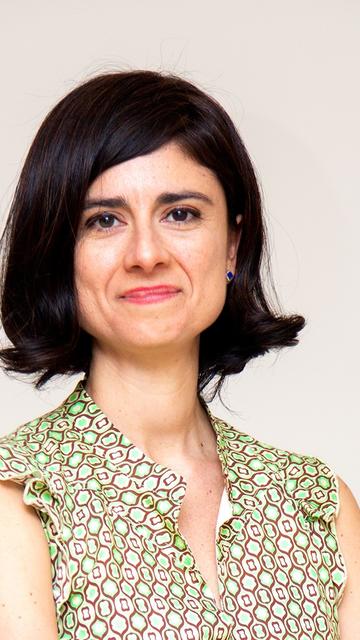
Florencia is an Argentine Economist with a BA in Economics from the University of Buenos Aires. Before joining the DPhil in Economics in Oxford, she lived in Belgium where she completed a Masters in Development Economics from the Namur University with a scholarship from the Belgian Government.
Florencia has held multiple roles in government, multilateral development bank and now in academia as Professor of Economics and Applied Psychology at NYU Steinhardt, as well as Director of an International Research Centre.
Tell us about your career after graduating.
After graduating, I chose not to go to the academic job market because I really wanted to work on public policies. Still, I got a post-doc offer in Oxford and also an offer to join the competitive “Young Professional Program” of the InterAmerican Development Bank (IDB). I ended up choosing the IDB as I was really tempted to work with Latin America (LAC). I joined their Research Department and spent 15 years working on the design, implementation and evaluation of health, education and social protection policies. There, I led the Early Childhood Development (ECD) team, the IDB ECD Innovation Fund, and an initiative on behavioural economics and social policies.
I advised LAC governments on the design, implementation, and evaluation of human development public policies, particularly on child development, social protection and health. I led operations for a total of $900M and garnered more than $40M to conduct research that bridges the fields of child development, education, health, social protection, behavioural economics and policy.
What is your current role or position?
Professor of Economics and Applied Psychology at New York University Steinhardt School of Culture, Education and Human Development and Director of Global TIES (Transforming Intervention Effectiveness and Scale) for Children: an International Research Centre whose mission is to combine cutting-edge and cross-disciplinary research to support initiatives in Low and Middle Income Countries that enable children, their caregivers, teachers, and communities to thrive.
Is there anything from your career or personal life that you are particularly proud of?
I am super proud of my lovely family (Belgian husband and 2 American kids, 15 and 11).
I am also proud of the impact in real world policies my research had had. For example, the more than a dozen rigorous policy evaluations I conducted have had a substantial policy impact, prompting governments to make paradigm-shifting policy reforms, program scale-ups, scale-downs, or redesigns to address some of the most pressing social problems. From 2019-2021 I also co-founded and advised the first two Nudge Units in Latina America. My research has also been featured in The Economist, El Pais, and the Washington Post, most LAC newspapers, among other media.
I am also proud of being an active promoter of diversity: I was a founding member of networks of women economists globally and in LAC.
What did you most enjoy about studying economics at Oxford?
I enjoyed the city so much; this is to me the most magical city I have ever been to. I have also enjoyed the faculty, so bright and engaged with our learning, and of course my amazing classmates, friends and the Manor Road Building where I spent so many hours.
But, mostly being a Development Economist, what I truly enjoyed is having a pool of faculty and graduate students working on the same topics I was working and for example the CSAE Conference was really what made me sure I wanted to pursue a career in Development Economics.
Which aspects of your degree have been most useful in your career?
So many aspects were useful! Of course the techniques: micro-econometrics, microeconomics, and- again- development economics, but also the empirical approach of many of the professors I interacted with at the time.
How did your time at Oxford influence you, your ambitions, or your career choices?
Oxford influenced me in many ways. I kind of knew I wanted to be a Development Economist, but Oxford reinforced the importance, and the skills to do that. By opening so many doors, it also strengthened my ambitions and the reach of my career choices.
What has been the biggest challenge in your career so far?
I'd say my challenge can be summarized in “so many things to do, so little time”. Prioritizing between the dissemination of science in simple term, basic research and policy work has been the hardest for me as I am interested in all of them.
What advice would you give to someone considering an economics degree at Oxford today?
The advice is to take advantage of the amazing environment in Oxford, try to talk with as many professors (also beyond Economics), go to all seminars and conferences. Work hard and seek for personal advice, most faculty will be very open to guide you on summer job opportunities, summer schools or career choices.
What are three aspects of your time at Oxford that you value the most?
Excellence
Friendships
Ambition (in a good way)